
1. Introduction
Once you move beyond simple Kubernetes installations you quickly discover the pain and limitations of managing deployments with manual kubectl commands and scattered yaml files.
As a senior developer and GitOps architect, I am quite familiar with how easy it is to outgrow these early approaches to building and managing your clusters.
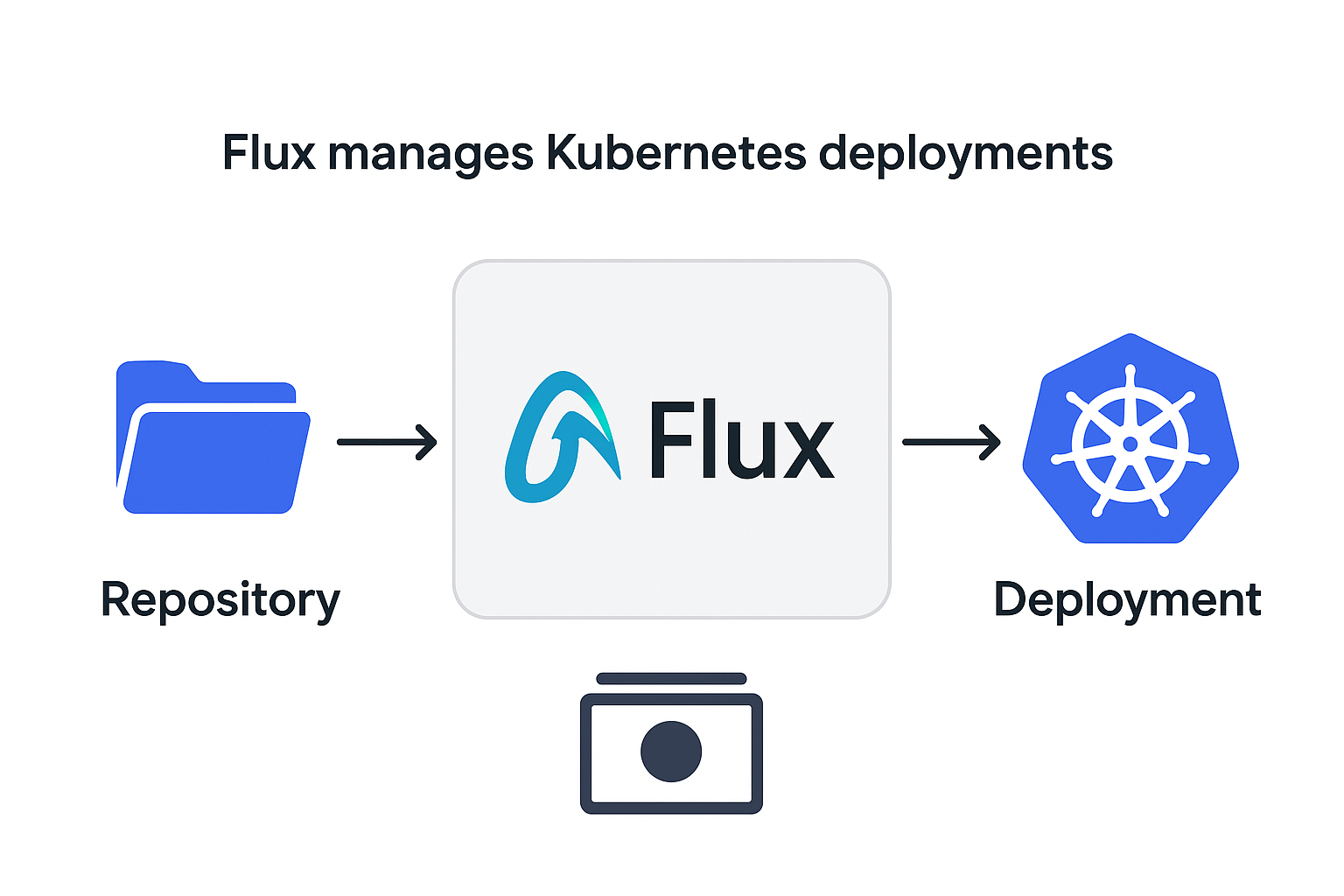
Flux, coupled with Git version control and DevOps pipelines, provides the missing pieces that make cluster deployments predictable, repeatable, and secure.
2. Flux to the Rescue
Manually updating Kubernetes objects may make you a Kubernetes wizard when certification time arrives, but in the real world it just makes installations brittle and prone to user error. Instead try the following ideas.
Infrastructure as Code
All of your infrastructure should be in version control, first and foremost. Deployments, Services, Jobs, Ingress, Crons, Helm Charts — it needs to be checked in and managed by a secure pipeline like GitHub Workflows or GitLab. This gives us an easily accessible window into what’s currently deployed and running and is our Source of Truth for Flux.
Flux will monitor our Git repositories for changes to our code base and seamlessly reflect this in our development, testing, and production environments.
Consider this simple deployment:
apiVersion: apps/v1
kind: Deployment
metadata:
  name: myApp
  namespace: default
spec:
  replicas: 2
  selector:
    matchLabels:
      app: myApp
  template:
    metadata:
      labels:
        app: myApp
    spec:
      containers:
      - name: myApp
        image: ghcr.io/myorg/myApp:1.0.0 # Flux will update this tag
        ports:
        - containerPort: 8080
Here myApp is using an image with 1.0.0 as its tag. We’ve told Flux to keep an eye on our manifests for changes every minute:
apiVersion: kustomize.toolkit.fluxcd.io/v1
kind: Kustomization
metadata:
  name: myApp
  namespace: flux-system
spec:
  interval: 1m
  path: ./apps/myApp        # where deployment.yaml lives
  prune: true
  sourceRef:
    kind: GitRepository
    name: flux-system
Once we commit a change, say:
- image: ghcr.io/myOrg/myApp:1.0.0
+ image: ghcr.io/myOrg/myApp:1.0.1
- Flux sees the new commit in Git.
- Flux reapplies the manifest.
- Kubernetes notices the image tag change → creates a new ReplicaSet → and gradually replaces the affected pods.
We’ve automated the drudgery of keeping our clusters up to date with a Single Source of Truth for all of our object definitions.
Conclusion
Admittedly this has been a fairly simple introduction, just a taste of, if not an advertisement for Flux. But hopefully I’ve given you the rationale to move beyond haphazardly using yaml files to building a production-grade, secure Kubernetes framework for you applications.

No comments:
Post a Comment